Radars & Fences / You Are Not Here / The Gaza Tunnel Trade

Radars & Fences III

Radars and Fences progam, with Laila & me

Radars and Fences progam, with Laila & me

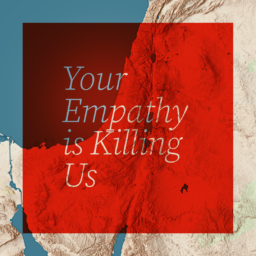
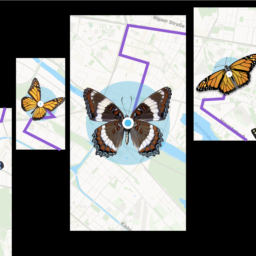
On Friday March 12th 2010 I will be participating at NYU’s Media Culture & Communications’ Radars & Fences III: Borders, Affect, Space (please RSVP and come). My friend Laila El-Haddad and I will present You Are Not Here – A Tour of Gaza Through the Streets of Tel Aviv, and we’ll discuss the way geography and the concept of the border is shaping the mediated experience of the conflict. We will also discuss some of our recent initiatives to disrupt the theater of conflict resolution.

I am posting an essay Laila and I wrote for the catalog of the Unrecorded exhibition in Istanbul, March 2008, curated by Basak Senova. At the end of the essay I embedded the videos of Laila & Saeed’s Al Jazeera documentary Tunnel Trade that have inspired this text.


The Gaza Tunnel Trade: Interpretations of Occupied Space

by Laila El-Haddad and Mushon Zer-Aviv

When Israel withdrew from the Sinai Peninsula in 1982, the city of Rafah was suddenly split between Egypt and Gaza by an Israeli wall. Families found themselves divided by a high-security international border, though their houses often lay less than 100m apart. Before long, influential families who once controlled trade through Rafah moved their business underground through dozens of secret tunnels burrowed below the border, connecting family houses on either side.

With Israel’s military withdrawal from Gaza in 2005, the number of tunnels mushroomed. The Israeli military used the tunnels as a pretext for stepping up demolitions of houses to make way for a buffer zone along the border. Israel’s main concern is the smuggling of weapons to armed Palestinian groups. But for the smugglers themselves there is far more to the tunnel trade than politics and arms smuggling. Everything moves through Rafah’s tunnels: from cigarettes and drugs to cash and people. It is a vast enterprise, and pays five times an average annual Gaza salary in one month. It is a family business, passed on from father to son and always – for reasons of security as well as economics – kept in the family.

Lucrative trade

The tunnel trade is not merely a black market, it is a multi-million dollar, top-secret industry run with military-style efficiency, and one of the most lucrative businesses in Palestine. Even Israel’s Foreign Affairs website acknowledges “This industry comprises a primary source of income for entire families, and is the main source of income in the area.” What was once opportunism quickly became an established industry with market fluctuations, share holders and dividends like any other business. Out of necessity, a handful of prominent Rafah clans used their strong cross-border familial ties to achieve illicitly what politics otherwise makes impossible.

Independent tunnelers exist, but creating and completing a tunnel requires not only experience, stamina, and the mental strength to stay underground for extended periods, but also financial capital. As a result, tunnels are usually financed by large clans or other groups with vested interests (even businessmen or government officials). The actual digging is often sub-contracted out to young diggers. Younger tunnelers hope one day to be able to “own” their own tunnel.

The tunnel trade is a lucrative one, but with great risks involved. Houses are routinely demolished and shelled if Israel’s military suspects they harbor tunnels-even though their existence is often used as a pretext for Israeli military activity in the area. Then there is the danger that the tunnel, some of them 1.5 meters wide and up to a kilometer long, might collapse during construction or smuggling. Or being caught and detained on the Egyptian side of the border.

In October of 2006, the Israeli military was even authorized to use air force against tunnels or houses suspected of hiding them, and yet Rafah families go on building and smuggling. With Gaza’s economy in ruins and the strip almost completely isolated from the rest of the world, there are few alternatives.

Re-interpreting occupied space

The tunnels also serve as a way for Palestinians to bypass and challenge the traditional boundaries of occupation, siege, and the Israeli “Matrix of Control”.  They have even been able to transport Palestinian spouses separated from one another and unable to otherwise enter Gaza because they lack the proper Israeli-issued ID cards and permits.  Such permits have traditionally been the tools used to control movement and residency and restrict access to and from the Occupied Palestinian Territories.

But the Israeli occupation has also utilized far more overt and deadly tactics.

In The Art of War (published by Frieze Magazine, May 2006) Israeli architect Eyal Weizman describes how Israeli military think tanks have been using urbanism, psychology, cybernetics, post-colonial and post-structuralist theory to develop new strategies and tactics of urban warfare against the resistance in the occupied west bank city of Nablus. Weizman is quoting Brigadier-General Aviv Kokhavi:

YouTube Preview Image
Moving Through Walls / Nadav Harel and Eyal Weizman

We interpreted the alley as a place forbidden to walk through and the door as a place forbidden to pass through, and the window as a place forbidden to look through, because a weapon awaits us in the alley, and a booby trap awaits us behind the doors. This is because the enemy interprets space in a traditional, classical manner, and I do not want to obey this interpretation and fall into his traps. […] This is why that we opted for the methodology of moving through walls. . . . Like a worm that eats its way forward, emerging at points and then disappearing. […] I said to my troops, “Friends! […] If until now you were used to move along roads and sidewalks, forget it! From now on we all walk through walls!”

While Kokhavi arrogantly presents the Israeli Army’s strategy of tearing through urban fabric of Palestinian life, it seems like the tunnel traders in Rafah, have themselves long departed from this traditional interpretation of space. While the critical discussion of urbanism in the West re-examines the city and attempts to expose the repressive invisible boundaries, in the occupied city it becomes an agent of repression. The city is not immune to the corruption of the occupation which is digging through walls and through the ground to posses and control any transfer of goods and ‘bads’. It seems the rules of urban theory breaks under occupation, when the ruler exerts both the visible and the invisible control mechanisms.

Challenged urbanism

The occupied city drives both sides of the conflict to challenge urbanism, but this non-traditional interpretation of urban space is not new to the Gaza strip. It runs back into history much further than contemporary cultural theory or the Israeli occupation. Tunnel digging has been a historic strategic tool in the region where ancient escape tunnels leading from forts and Churches led (sometimes for more than a kilometer) all the way to the sea. The tunnel proficiency has been used in the attack on an Israeli base outside the Gaza Strip. In summer 2006 several Palestinian gunmen popped out of the ground, attacked and killed several Israeli soldiers, and captured one of them, Gilad Shalit, through the tunnel and into Gaza. This sophisticated attack, reinterpreting the border, has left the Israeli society terrified. It has also played a major part in the lead up to the war in Lebanon the week after, when Israeli territorial sovereignty was breached again, this time on the Northern border.

Our interpretation of space is to a large extent dominated by the fundamental human experience of gravity – walking freely on the earth. Yet, today, interpreting space in this ‘traditional manner’ is a luxury deprived of people under occupation. In Gaza, the ground is literally torn under your feet, and this fundamental point of spatial reference is lost.

In January 2008 the Israeli siege on the Gaza strip have resulted in thousands of Palestinians, mainly women, tearing down the Rafah wall and removing the overground barrier between the Palestinian and Egyptian sides of the city. At the time of publication, parts of the wall are still down and the underground monopoly has been temporarily broken by civilian society, unbound, overground.


*This article is based on The Tunnel Trade – a documentary Film by Laila El-Haddad and Saeed Taji Farouky, aired on Al Jazeera, September 2007.

The Tunnel Trade Part I:

YouTube Preview Image

The Tunnel Trade Part II:

YouTube Preview Image

Posted in Recommended Posts | Tagged , , , , , , , , , , | 2 Comments

Upgrade New York: “Free As In What?” video

We have just uploaded the video documentation for one of the most interesting Upgrade events we had in the past year with Biella Coleman and Zach Lieberman discussing the tensions within the Free Software / Open Source world(s?) on the meaning of “free”. It explores the tensions between ethics and pragmatics, between “to free” and “to open”, between means and ends. If you’re interested in these issues I really recommend you check it out:

Posted in in English | Tagged , , , , , | 2 Comments

#BuzzOff: 10 reasons to turn Google Buzz off

Please RT! (click the image)

On February 9th Google have unvailed Google Buzz, a service that involuntarily transforms every Gmail user’s private contact list into a public social network. While Google has suffered from privacy concerns in the past, Buzz is considered by many angry users to be crossing a line. Many loyal Google users including myself have hence chosen to disable the service. I present a list of reasons why you and your contact list should do that too.

1. Choice: We never asked for it

First and foremost we have never asked for Buzz, we have never signed an agreement to enable it and we don’t necessarily want it. Even without all of the many other reasons, this should be enough. Many of us are already oversaturated with social media and Buzz just creates more noise. The fact it is coupled with Gmail makes it harder to resist the temptation to waste even more time on depressing filtering of meaningless contextless chatter.

2. Privacy: Our private and public contacts are not the same

An abused women workplace and new partner exposed to her abusive ex; doctors’ confidential client list shared with the world; journalists’ sources automatically revealed; Iranian and Chinese activists networks mapped for their governments to easily track; your own private contacts, private no more. When asked by CNBC if users should trust Google as a friend the company’s CEO Eric Schmidt answered:

“If you have something that you don’t want anyone to know, maybe you shouldn’t be doing it in the first place.”

I don’t know if this is the excuse he was also making internally at Google in their privacy debates over Buzz which they most certainly have had before giving the green light for this bold move. Schmidt and Google are not vindicated by the fact Facebook has been compromising its own users’ privacy and that its founder Mark Zuckerberg have been making similarly miserable statements. In response to Zuckerberg social media researcher and lead thinker on the issues around the online public/private danah boyd says:

“Privacy isn’t a technological binary that you turn off and on. Privacy is about having control of a situation.It’s about controlling what information flows where and adjusting measures of trust when things flow in unexpected ways.”

The same applies to Google. This time, it was even more “unexpected” as it simply happened.

3. Context: Who you interact with on different services is different for a reason

“By offering social communications, which have primarily been used for entertainment purposes, Buzz would bridge the gap between work and leisure.”
Google co-founder Sergey Brin on Google Buzz, quoted by the New York Times

Why would we want to do that? There are very good reasons for us to keep different contacts on different service. In fact, one of the most often complains people have about Facebook is that its popularity has ruined it. Once both my clients, my students, my colleagues, my kindergarten friends, my boss, my grandma and some hundred other people who claim they know me all “friend” me on Facebook the platform immidiately loses its social context. Would you invite all of your facebook friends to one party? Would you want to tell all of them the same thing in the same way? Yeah… me neither. Now ask yourself the same question about anyone you’ve ever emailed with on Gmail, including all the people you email with and you just can’t stand. E-mail gives us control over the contexts and tones of our different relationships and that’s its key feature. That’s something Buzz is ignoring by turning our email contact list to a social network.

We switch between different social networks all the time, we manage different social graphs (social structures) and manage different aspects of their identities in different ways on any of them. That’s exactly why we develop work relationship around our LinkdIn contacts and leisure relationships around our YouTube contacts. No Sergey, we don’t want you to bridge this for us and I wish I could add “…thanks for asking”, but you didn’t! Read More »

Posted in in English | Tagged , , , , , , , , | 25 Comments

Help Strike a Win for Watchdog Journalism – Vote for NewsShift

NewsShift turns the news page into a node in a networked collaborative journalistic effort, it needs your help

NewsShift is the title of the grant application coming from some of us at the ShiftSpace team in collaboration with LittleSis.org. NewsShift basically turns a news page into a node in a networked collaborative journalistic effort. It has made it through the first round of proposals and is constantly trending as one of the highest rated applications in the 2nd round in the Knight News Challenge site.

We would really appreciate your help in voting for it, commenting on it, tweeting and Facebooking about it & making sure to get the word out there (you need to register to do that, it’s a headache, but it would help save journalism, so it’s worth it…)

Here are 5  slides that would help explain the idea:

A bit more about NewsShift:

NewsShift is a web platform that adds a collaborative research layer to online news stories. This layer, accessible from the news page itself, offers readers powerful tools to communicate and develop the story with additional information and insight — facilitating collaborative watchdog journalism. As news budgets get cut, local journalists have limited time and resources for investigative reporting. At the same time, readers are responding to news stories with valuable research and analysis using blogs, comments, and other social tools. NewsShift allows readers to share their findings and work constructively with journalists to add new depth to local news reporting. NewsShift tools let readers augment a news story in simple ways: index important names and topics; link place names to maps; footnote quotes with informative URLs. NewsShift can also query web services for data related to the story, letting readers curate what’s important.

A reader can use NewsShift to expose a local conflict of interest. For example: a story on a waterfront development project mentions the mayor’s role in picking the real estate developer. Using NewsShift, a reader discovers that the developer is a top campaign donor to the mayor, and inserts a link to this information. The story’s writer notices this link, and the substantial investigative work that followed it, and writes a follow-up piece airing concerns about the mayor’s ties to the developer.

Similar networked researches happens frequently, but are often lost in the comments or spread thin over the web. NewsShift connects local reporters and readers more closely in the journalistic process, and harnesses their combined research power to connect the news to a broader network of information.

Posted in in English | Tagged , , , , , , | 1 Comment

Collaborative Futures Day5: DONE!

We did it!

It took 5 days, no pre-coordination, we didn’t know each other in advance, we don’t necessarily agree on a lot of things, but we wrote a book together – more than 30,000 words written, edited, redited. On Monday it will be sent to the printer and that’s it. Kind of…Well the book is open ended, the first release will be printed next week but anyone can go and add to the book or edit the current version.

The book (PDF & ePub versions to follow soon) turned out way way way more successful than I expected, but maybe it’s only because I didn’t get enough sleep. We covered a lot of ground, many of our chapters are skeptical others are very hopeful. Some of the collaborations mentioned in the book refer to examples as new as last week (Haiti), some are very personal, some are just hilarious.

CF team - Temporary image, until I get a better one with everyone inside

Disclaimer

7 things this book is not:

  1. It is not an exhaustive survey of any type or any aspect of collaboration
  2. It is not consistent in its tone and writing style
  3. It is not devoid of repetitions or conceptual holes
  4. It is not really an art book
  5. It is not really a cultural theory book
  6. It is not really a technology book
  7. It is not bad at all

Read More »

Posted in in English | Tagged , , , , , | Leave a comment

Collaborative Futures Day4: Web 3.0 is bullshit too

4 days of intense collaboration have passed. 1 more day left to go. I’m tired.

Networking with new collaborators

Marta and I comparing quotes and cats - pic by Mandiberg / Flickr

Today we have finally got better about receiving external help. When I started to write about GIT vs. SVN as references for collaboration systems I checked out Jonah Bossewitch’s Versioning Dissonance paper which he sent me after finding my first post in this series and reading that I might be interested in these ideas. I was initially planning to find a nice quote from him, but ended up realizing he basically wrote what I had in mind, only better. Since he licensed it under a CC-BY-SA license I could just copy paste the Multiplicity and Social Coding part of the essay directly into the book. Jonah will probably go into Booki edit it a bit tomorrow, but it is already a very good contribution to the book as is. By the way Jonah is involved in the pretty astonishing work done by NY based geeks hacking for Haiti, read about it on his blog.

We also got a piece about Anonymus from Patrick Davison. Jon Cohrs, whom I originally know from Eyebeam and who now lives in Berlin joined us too and worked with Michael on some of the pieces. Sophie the copy editor joined in person too and helped me edit some of the definition chapters.

My good friend Ela Kagel from Upgrade Berlin who’s one of the curators of this year’s Transmediale was today’s guest of honor. She quite elegantly blended in. It was largely due to the fact that by this morning we knew we are in pretty good standing and that we can allow ourselves to better brief her about what’s going on. Ela decided to write a chapter for the Futures section of the book titled Collaborative Economies and by the end of the day the chapter was pretty much done.. As a teaser for it I’ll quote one of the quotes she used:

“Cities without gays and rockbands are loosing the economic development race.”

Richard Florida from The Rise of the Creative Class

It seems like finding sexy quotes has assumed some game mechanics in our process with Marta constantly trying to one-up me with great quotes. Quotes are great, you get both a sound byte, an amusing pause and some social capital by having smart people passively validate your thoughts. At some point Marta and I stopped competing on quotes and started comparing our beautiful cat pictures from Flickr (M vs. M).

So it’s bullshit, but in what way

From day one Adam and Martha were into having a piece that pretty much says Web 2.0 is bullshit. Adam took a pass at it and started with a few essential bulletpoints:

  • Incentivize data-driven network effects!
  • Integrate data-driven weblogs!
  • Syndicate A-list network effects!
  • Beta-test user-contributed web services!

A direct output from the Web 2.0 bullshit generator. We all took our turns giving feedback and context. Mike helped integrate it into the history section and I ended up working on it a bit myself. It seemed like we all agreed it’s bullshit, but each of us had our own reasons. I was glad to see we have finally came to a disagreement that while Web 2.0 is bullshit, Web 3.0 is bullshit too. (it might sound like a rant, but it ended up being a pretty well articulated point)

One more day to go, we are going to make it. For real!

Posted in in English | Tagged , , , , , , | Leave a comment

Collaborative Futures Day3: Who is I?

It has been another intense day of recursive collaboration at the Collaborative Futures book sprint here in Berlin. Currently at around 23,000 words. Not bad for just 1, 2, 3 days…

Attribution

The people in the room have quite strong feelings about concepts of attribution. What is pretty obvious by now is that both those who elevate the importance of proper crediting to the success of collaboration and those who dismiss it all together are both quite equally obsessed about it. The attribution license we chose for the book is CC-BY-SA oh and maybe GPL too… Not sure… Actually, I guess I am not the most attribution obsessed guy in the room.

Scale

We had a parallel sushi sprint going on. I should work on my rolling skills...

We had a parallel sushi sprint going on. I should work on my rolling skills...

Another somewhat illuminating anecdote is that we have some parallel scale issues. We were joined by Michelle Thorne (Creative Commons Germany, Open Everything, Atoms and Bits) and by Mirko Lindner (OpenMoko, more…) who were invited to help us with writing. These are super interesting and talented people who I would love to spend time with. But today there was just no way it was going to happen. Apparently two days were enough for us to construct such a tight process that we could not allow ourselves any distractions.

It seems that the tight time constraints serves as a reverse factor for participation scale. We are so invested in the process that we are reluctant to spend time in coordination and assimilation of new contributions into the overall process. This time constraint is pretty rare for these open collaborations and it definitely affects the actual openness to new participation.

Michelle and Mirko actually wrote about it in for the self-referential epilogue section: Outsiders: thoughts on external collaboration (scroll all the way down to the bottom of the page)

Schizophrenia

Yesterday I first ran into this issue of subjectivity. I was about to write “I actually more am interested in…”, but since we are writing collectively I asked the group how should I write this? Am I interested? Are WE interested?

Today this conflict got even more complex when I wanted to refer to a personal anecdote. Both Michael and Mike have already done it in their own writing but they were able to quote themselves as they were indeed quoting previous written sentences. In my case, this was a grim memory from my army days. Not something I have ever put on paper.

Do I say I? Who is I? We’re writing in plural, as “we”. Do I say “one of the authors”? That’s pretty lame and quite superficial, and come on… how many of “the authors” served in the Israeli army? Do I quote myself? It doesn’t really make sense, it is not like I am reappropriating a quote from a different context. Should I declare explicitly that I am switching to first person for the anecdote’s sake? It is a fucking anecdote, any writer will just write it as: “I remember…”. Is English just not equipped for this collective thing?

This was getting quite schizophrenic. As for now we left is as is – unstated. It is still bound to change as we have 2 days left. But all these conflicts more than frustrating they are simply fascinating.

Posted in in English | Tagged , , , , , | Leave a comment

Collaborative Futures Day2: “Knock, knock.” “Who’s there?”

This is so much fun!

On the second day of our “Collaborative Futures” book sprint (read the posts about it and about day 1) I was still very skeptical about our process and our chances of success. But as the day progressed the project started taking shape and I’m actually even more excited about it now (and the same goes for the rest of us).

Most of our work today was actually heads on writing and from time to time some more lower level structure stuff. I focused mainly on definition issues and wrote drafted three chapters under this section tentatively titled: Sharing is the First Step Towards Collaboration, Coordination Mechanisms, Does Aggregation Constitute Collaboration?

My co-conspirators have wrote about assumptions, history, web 2.0 is bullshit, motivation, open relationships, and other people’s computers (revolving mainly around cloud issues). Pretty interesting writing, as this is definitely a group of pretty informed and passionate people.

We have also drafted a more detailed outlines to the whole book which would be the basis for our call for remote (ahm…) collaboration tomorrow, so definitely stay tuned for that.

Knock, knock…

One of the sections we’ve drafted was an unexpected yet somewhat obvious epilogue which will refer to some of the anecdotes that we are experiencing through this collaboration. I want to share one of them with you now. Around noon today we hear a knock on the door. Now let me just explain the set up, we’re working from a hotel room in a complex called IMA Design Village, on the 5th floor of an old (nicely) reappropriated industrial building with a jerky elevator and nothing to really point you at where we are. All of us were in the room at the time and we were not expecting any company. We opened the door and there stood a guy around our age who said he has heard about the project and he wants to contribute.

We were both amazed and mainly unprepared. He didn’t even say his name, he just said he had some ideas about collaboration and he really wanted to contribute. That was just completely great! But while we announced that the collaboration will be later opened to remote collaboration, at that moment, in that place we were completely unready for more people in the room. Adam (which the mysterious contributor said he met in some obscure music event in the city) have went with user-X downstairs to the cafe to discuss the contribution and he (still don’t know his name) will join us tomorrow writing a chapter for the book.

This was a unique experience of (finally) meeting the epic “anonymous user” in person. That faceless person that does not even have a username but is highly motivated and just wants to start contributing was standing there in-person at our doorstep. We didn’t know his name, we only knew his IP address–where he physically is: he was right there! Practically browsing our “collaborative site”.

And we? We were so Alpha, we were what early web people two decades ago used to call “under construction”. We didn’t even have an interface for him yet. It’s like he found a public yet unannounced URL for a future collaborative platform that was just not ready yet. We thought we were private, but apparently we were live. We were caught off-guarded with our first anonymous visitor, very online and just eager to log in.

If this will continue to be the spirit through the next 3 days I do expect to be continuously surprised. More updates on proxy collaboration definitely coming tomorrow. This is really great!

Posted in in English | Tagged , , , , , , , | 4 Comments

Collaborative Futures, Day #1

The stickies on the wall after an intense day of presentations and discussions

The stickies on the wall after an intense day of presentations and discussions

Berlin is beautiful in the snow, though we get to experience it mainly through the window. Day 1 of the “Collaborative Futures” book sprint (more about what it is in my previous post) was fascinating and intense. I feel very privileged to have met this  group of talented people, all coming with strong experience and insights about collaboration, all with a pretty explicit free culture & free software bent. (I was weirded out by being the only one to nut be running Linux on my laptop)

As I suspected, this is not an easy task. After a day of intense work we came up with the (tentative) guidelines for the book. You can think of it as a table of contents but it will serve mainly as a general guideline for our writing this week. Finally, this will not be an exhaustive survey of the term collaboration (which would be a boring outcome), but rather a set of articles and insights (and possibly some predictions) about the past present and future of collaboration as informed by our experiences and interests.

Here’s the TOC for the first day:

  • Assumptions
  • History
  • Definitions
  • Process
    • Models
    • “Other people’s computers”
  • Problems
  • Futures
  • Epilogue

Other clusters of themes we have brought up and that will or won’t find themselves in the book are: motivations, politics (as in national group identity), money, autonomy, power, free culture, free software, trust, licenses, law, identity, reputation, attribution, scale, leadership, goals, org culture, structures, learning from mistakes, value and bullshit.

Check out the sites and relevant posts from my fellow sprinters: Mark Linksvayer (0+1), Michael Mandiberg (0), Aleksandar Erkalovic, Marta Peirano, Alan Toner, Adam Hyde.

our workshop room (my bed is behind that Ikea thing) and snowy Berlin from the window

Posted in in English | Tagged , , , , | Leave a comment

Towards the (week of) Collaborative Futures

During the upcoming week I will be working in Berlin with 6 super smart people (Adam Hyde, Mike Linksvayer, Michael Mandiberg, Alan Toner, Aleksandar Erkalovic, Marta Peirano) on writing a whole book from scratch titled “Collaborative Futures”. The format for this collaborative writing was developed by Adam Hyde and the Floss Manuals community which is devoted to extending the accessibility of free software through the compiling free and liberally licensed manual books. The books are published online and their PDF formatting allow for an easy print on demand option.

Our book sprint is not setup as a manual though, commissioned by the Transmediale (a Berlin based new media art festival) the only piece of information we will have will be the book title. Unlike a software manual (like the one for Inkscape) or a digital practice manual (Like the one titled “How To Bypass Censorship”) this one will not have a solid rational task to bounce off of. Beyond that, throwing “futures” into the mix makes our concrete collaborative basis even thinner.

None of us know what format we will choose but all of us come with a pretty extensive experience in collaborative work so I definitely expect it to be insightful. Some of the themes I would be interested in exploring are:

  • Bridging between “sharing” and “collaboration”
  • Possible lessons from code revision technologies (like SVN vs. GIT)
  • The boundries of networked productions (like the challenges to open source design)
  • Networking beyond enemy lines – when “collaboration” is a bad word (in the Israeli/Palestinian context it is often interchangable with treason)
  • What can we learn from Haiti?

Ahhh… thousands more are comin up as I write this… but my plane is about to leave so I’d better publish before I leave NY (writing this on my phone… hard!)

Last thing: This project is open to collaborations beyond the 6 of us, we will publish how to contribute and help probably on Tuesday morning.

Last call… more updates to follow…

Posted in in English | Tagged , , , , , , | 5 Comments